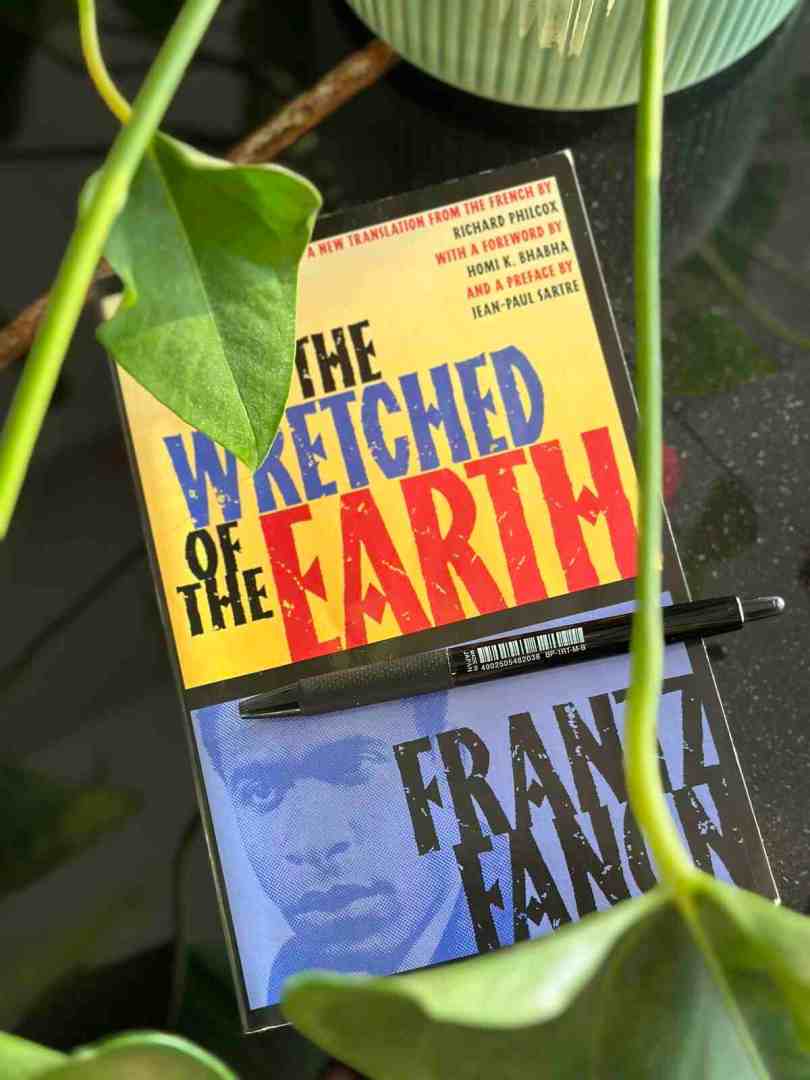
- In the opening of The Wretched of the Earth, Frantz Fanon makes sure that we understand that “decolonization is always a violent event.” To liberate himself, the oppressed man can only succeed by resorting to every means, including violence.
- Does the colonist “know” the colonized subject? Yes, because the colonist is the one who created (and is always in the process of creating) the colonized subject.
- Decolonization is the creation of new men who, up until their liberation, were defined by the colonist and were treated as sub-humans. The creation of “new men” is a central aspect of decolonization. To finally be free, the oppressed man must give birth to himself; to liberate himself, he must redefine himself. As long as he is defined by the Other, he is still colonized. A “new man” is a must. If you want to be more like Europe, why fight for your independence from them? Fanon writes, “Humanity expects other things from us than this grotesque and generally obscene emulation.” He wants the Third World to start a new history of man. Accordingly, he concludes the book with the following: “For Europe, for ourselves and for humanity, comrades, we must make a new start, develop a new way of thinking, and endeavor to create a new man.”
- The colonist will always be afraid of the colonized subject because he simply knows that, when the day comes, he must pay for the suffering he caused. The “dignity” he took away from the colonized subject is a debt that must be paid back in full. In the eyes of the man he colonized, he sees the promise of violence — he sees his demise.
- The colonized subjects know that they are not, as they are often portrayed, violent animals, but they also know that violence is the only language colonial powers understand. “The colonized man liberates himself in and through violence.”
- The oppressor (the colonist, or the bourgeois, or the ruling class) always appears to be more civilized. They present themselves as peaceful, non-violent beings. Educated and cultured, they have their savoir-vivre and their etiquettes. But these things are nothing but curtains and masks. They show their true selves as soon as the colonized man’s fingers roll info fists. Even those who remain “neutral” and “objective” are oppressors. As Fanon puts it, “For the colonized subject, objectivity is always directed against him.”
- “The colonial world is a compartmentalized world.” There’s the oppressor’s part of town, and there’s the part of town that belongs to the oppressed. These “parts,” however, don’t necessarily have to be geographical. The oppressor and the oppressed may live on the same street or work in the same building. But even when they occasionally hug and dance like inseparable friends or lovers, there’s still a line — visible or invisible — that separates them. The colonists feel protected by the law and the police. The colonized subjects don’t.
- When they rape the wife or kill the child of the colonized subject, nothing happens. When the oppressed man is tortured, he does not complain. He knows that the authorities of oppression will not punish what imitates or reinforces them.
- Two things that keep order in the colonized world: force and education. The boot and the book. By force we mean the police or the army. By education we mean the teaching of values that “instill in the exploited a mood of submission and inhibition which considerably eases the task of the agents of law and order.”
- “The colonized man is an envious man.” The oppressed man dreams of taking the place of the oppressor. His dreams are “muscular dreams, dreams of action, dreams of aggressive vitality.”
- There are no good colonists.
- “The apotheosis of independence becomes the curse of independence.”
Discover more from Bored Absurdist
Subscribe to get the latest posts sent to your email.
 Bored Absurdist
[…] one must ask: What would the colonized man say? What would someone who has read Fanon’s The Wretched of the Earth say? Is it better to be dehumanized but for there to be order, or is it better to be free but for […]
LikeLike