The Interpretation of Lies (Part One): Neither True Nor False

Lying has been an indispensable skill in politics since the beginning of time. In The Republic, Plato writes:

If anyone at all is to have the privilege of lying, the rulers of the State should be the persons; and they, in their dealings either with enemies or with their own citizens, may be allowed to lie for the public good.

We see here how, from the beginning, philosophers saw that politicians should be allowed to lie. (Today, most of us accept this intuitively.) However, it is also important to note that double standards are employed. In the following paragraph, Plato writes that if the ruler catches anybody other than himself lying, that person must be punished. (We can also add to this that when a person exposes one of the Big Lies told by the government, he will be regarded as a traitor…)

Everything a politician says simultaneously conveys a lie and a truth, whether he is aware of it or not. Those who oppose him will hear the lie; those who support him will hear the truth. But neither of them will be right. Only a skilled (and well-equipped) political analyst will be able to absorb the whole, the truth and the lie together.

When a politician speaks, he is directing his words to friends and enemies at once. He is addressing supporters and non-supporters, and he needs to ensure, consciously or unconsciously, that the message delivered (and interpreted) is just right for all sides. This is especially true in a time when everything ends up online and is accessible to everyone. One is always potentially speaking to everyone on the planet. A politician who is fully transparent with his people, then, is a politician who is fully transparent with his enemies. Such a politician is bound to fail. There is no possibility of addressing his friends separately and his enemies separately. So, if one wants to have a successful career in politics, mastering the art of lying is necessary and required.

Accordingly, since the possibility of a lie is always there, then the following statement is a very reasonable one to accept: that a politician’s words are neither true nor false and are always simultaneously conveying lies and truths.

In (21st century) politics, especially because it is accessible by anyone from anywhere, every political statement is the mother of many interpretations, all of them as real (as true and as false) as the other. Retrospectively (re)visited, the meaning of each statement is different (even if it appears to have remained the same) due to parallax. Looking at an event (or a political statement) from different spacetime coordinates changes its meaning. (The meaning is not in the object itself, which in this case is the event or political statement; the meaning is the subject’s relationship with the object.)

[History, as a true historian would tell you, is not static. New evidence, whether true or fabricated, can change the whole story. How we perceive the past is the past. Historical revisionism, therefore, is an attempt to change the past into a more favorable past. And the same goes for the future. The future is not static either. Both past and future are interpreted, edited, and moderated by the present forces that control the narrative. As for the present, although it may seem like an either/or reality, it almost never is. The moment lived will be revisited and changed later depending on the political needs of the future.]

To understand politics, one must accept the simple fact that all coins are two-sided. While the supporters and their opponents argue which side of the coin holds the real value of the coin (and even try to split it), the skilled analyst knows there’s no one-sided coin and there can never be. The side of the coin that depicts the truth and the side that depicts the lie cannot be split from one another.

Moreover, the side of the coin that depicts the truth according to the supporting party is the side that depicts the lie according to the opposing party, and the side that depicts the lie according to the supporting party is the side that depicts the truth according to the opposing party. Therefore, we can say that each side of the coin has (at least) two contradictory interpretations. This means that every word uttered by a politician has two opposing sides, and each of these opposing sides has at least two interpretations.

It gets even worse when you realize that the political agendas and manifestos that are made public follow the same rules we mentioned above. They can neither be a collection of true intentions nor a collection of lies. So, the political party you are a member of may or may not align with your beliefs behind the scenes, even if on the surface it looks like you’re exactly where you belong. In fact, although this might complicate things further, we can even add that your beliefs are mere echoes of political ideologies that you have inherited or adopted over the years… You know what this means: Nothing is true, politically speaking, and worst of all, nothing is a lie.

So, how can we interpret today’s politics?


This piece was originally published on my Substack on July 26, 2025.
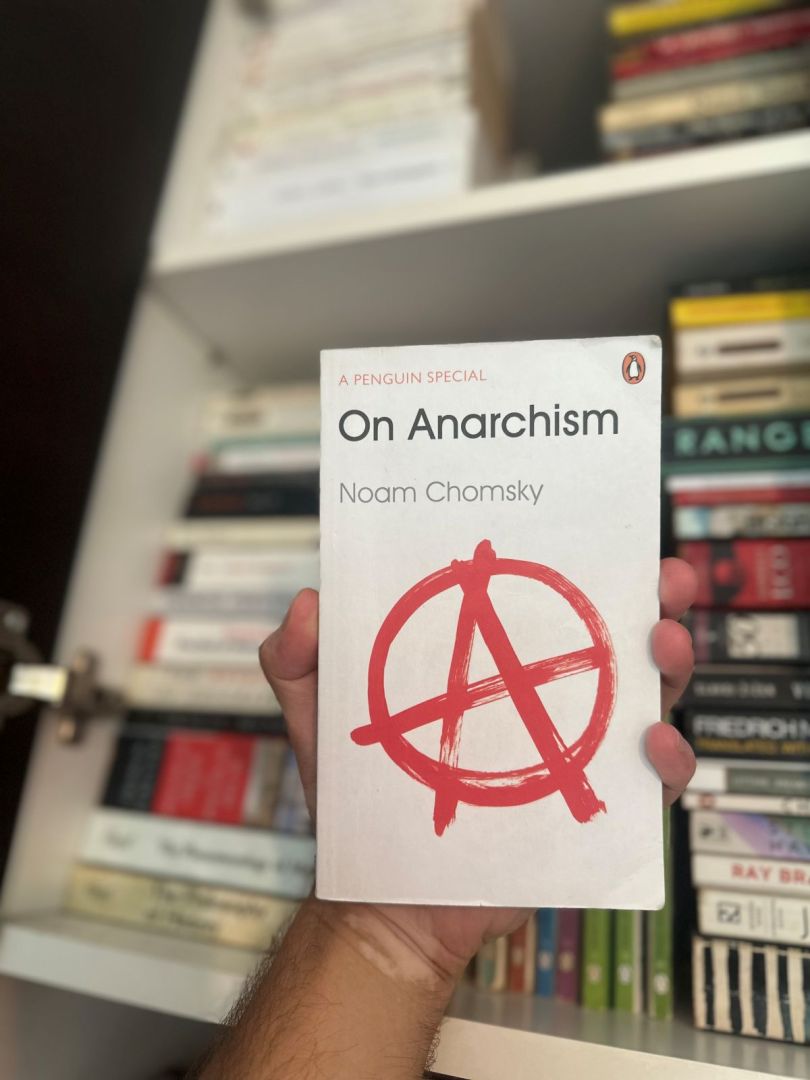
Ungovernment: Mirroring the Presupposition that the Governed Are Evil

Since governments presuppose that humans are (or have the capacity to do) evil,1 the governed must reciprocate by presupposing all government forms to possess dystopian potentialities. The governed must take this position because those who govern are also human, therefore deserving of the same presupposition. However, even if the government is not run by humans, the governed individual’s position must remain the same. All governments, especially the ones that are run by non-humans (i.e., artificial intelligence), are control, control-optimization, control-maximization systems. All governments have (hidden) utopian tendencies, which are, of course, sublimations of dystopian drives.

Governments, by (their artificial) nature, work to increase order. More externally imposed order means less freedom for the individual, and Absolute Order equals zero freedom. When the needle moves towards Absolute Order, roboticization of humans takes place; when the needle moves towards Absolute Chaos, animalization of humans takes place. In the former, man is treated as a machine; in the latter, as an animal. Both are forms of dehumanization. The good government, therefore, is the one which is able to hold the needle right in the middle; however, governments, being what they are, are built to pull the needle towards Absolute Order. That is why we need something we’ll call ungovernment (for now)which is an institution (or a yet undefined thing) whose role is to remove unnecessary control and restore agency, responsibility, and decision-making to individuals. [Note: the ungovernment is nested within the government like anti-production is nested within production in Deleuze and Guattari’s Anti-Oedipus.]

Similar to systems of order (or negentropy) like governments, we need systems of chaos (or entropy) like ungovernments. We can imagine these two systems running simultaneously in every city (or country) against one another, keeping the balance between order (a safe unfreedom) and chaos (an unsafe freedom). Unfortunately, no such thing as ungovernment exists yet; therefore, when order (crosses the red line and) becomes unfreedom, the governed must rebel even if life has become more comfortable under the tyranny of utopian dreams.

The governed, of course, need the government for society to exist, but they also always need a failsafe: they must retain the capability to rebel against and overthrow any government when its governing methods (or results) become unbearable, unbearably comfortable, or simply unacceptable. [How can we forget the opening sentence of Herbert Marcuse’s One-Dimensional Man? “A comfortable, smooth, reasonable, democratic unfreedom prevails in advanced industrial civilization, a token of technical progress.”] Whatever the system, there must be a failsafe, some prospect of (manually initiated) anarchy; otherwise, humanity is doomed.

The ideal government must, in theory, be invincible — at least, aim to be invincible — against law breakers and enemies, yet it must remain vulnerable to the will to freedom of its people. To repeat: The government must have the power to protect its citizens from each other and from others AND provide space for freedom, i.e., chaos. To repeat again: Even though the government is preferably seen (and, in ideal scenarios, even is) invincible against its enemies, it is crucial for it to have that Achilles’ heel: It must be vulnerable to the will to freedom of its citizens. Otherwise, it is an evil government.

All that has been said so far requires an impossible balancing act. It’s an eternal game of tug of war. On one side, we have the government; on the other side, we have the governed (or the ungovernment). If any of the sides loses or gives up pulling on the rope, the game of civilization ends.

Today’s governments will not openly admit that their systems presuppose men are evil, that you, the governed citizen, are evil. At the same time, however, any reasonable person understands that governments cannot operate effectively without taking this reality into consideration. Governments need to presuppose that humans are (or have the capacity to do) evil. To have order, the problematic human nature (codes of entropy) needs to be contained by laws (codes of negentropy); otherwise, there will be chaos. Governments are primarily there, therefore, to bring the (potentially chaotic) freedom in man under control and impede entropy. But even if this is, in general, a good thing, the governed must always keep an eye on the government… because as soon as the governed individuals stop pulling on the rope, as soon as they let the government do what it does best, they will find illusory peace and comfort but gradually (and surely) lose their freedom.


[1] Let us quickly confirm that a majority of political thinkers align on the idea that men carry the seed of ruin in them, that they are wicked when left unchecked.

That is our first step: to prove that, according to governments, man is a body of potential evil deeds (who, if governed properly, can be turned into a productive machine). We can do this swiftly by quoting a few influential political thinkers I happen have on my desk right now (who, in turn, have summarized the views of the greats who came before them).

In The Concept of the Political, Carl Schmitt writes:

What remains is the remarkable and, for many, certainly disquieting diagnosis that all genuine political theories presuppose man to be evil, i.e., by no means an unproblematic but a dangerous and dynamic being. This can be easily documented in the works of every specific political thinker.

In Discourses on Livy, Machiavelli writes:

As all those who write about civic matters show and as all history proves by a multitude of examples, whoever organizes a state and establishes its laws must assume that all men are wicked and will act wickedly whenever they have the chance to do so.

And without getting carried away, and to have a little fun, we can also quote the great pessimist Arthur Schopenhauer. In his collection of essays called On Human Nature: Essays in Ethics and Politics, we read:

Man is at bottom a savage, horrible beast. We know it, if only in the business of taming and restraining him which we call civilization. Hence it is that we are terrified if now and then his nature breaks out. Wherever and whenever the locks and chains of law and order fall off and give place to anarchy, he shows himself for what he is.

Of course, these aren’t the only quotes found. One can easily quote from Hobbes’s Leviathan, too, where without a common power to keep people “in awe” every man is at war with every man.

That should be enough. But since we’re already here, we can also take a moment to go back further in time and see what Plato had to say in The Republic. In Book II, Glaucon tells the story Gyges to show Socrates that “all men who practice justice do so against their will, of necessity, but not as good.” In the story, Gyges, who was a shepherd, finds a ring that could turn him invisible whenever he wanted. Since, as Glaucon argued, “no man would keep his hands off what was not his own when he could safely take what he liked,” Gyges goes and slays the king and takes over the kingdom. Glaucon then adds, “If you could imagine anyone obtaining this power of becoming invisible, and never doing any wrong or touching what was another’s, he would be thought by the lookers-on to be a most wretched idiot.”

Long story short, the idea that man is wicked when left unchecked is as old as civilization.


This piece was first published on my Substack on April 17, 2026.

Book Review and Quotes from Robert D Kaplan's The Tragic Mind: Fear, Fate, and the Burden of Power

Notes and Quotes from Robert D. Kaplan’s The Tragic Mind

The main message of Robert D. Kaplan’s The Tragic Mind is this: that political leaders and decision makers ought to think tragically. They need to be aware that, although there is good and evil in the world, politics is more often about a “battle of good against good.” They also need to be aware that, even though a decision must be made, political outcomes cannot always be win-win or even win-lose. Sometimes, all possible outcomes are lose-lose outcomes, and the decision maker must choose which lose-lose outcome is best.

Notes on The Tragic Mind: Fear, Fate, and the Burden of Power

The Hobbesian Kaplan. — Kaplan is Hobbesian. He almost always prefers order over chaos because, like Hobbes, he seems to believe that the state of nature is a state of war. As Hobbes put it in Leviathan, “There is always war of everyone against everyone. Hereby it is manifest that during the time men live without a common power to keep them all in awe, they are in that condition which is called war; and such a war as is of every man against every man.”1 Correspondingly, Kaplan writes, “The fact that the state should monopolize the use of violence rescues us from the worst of fates: anarchy.” And “even the worst regime is less dangerous and terrifying than no regime at all.” (Here, however, one must ask: What would the colonized man say? What would someone who has read Fanon’s The Wretched of the Earth say? Is it better to be dehumanized but for there to be order, or is it better to be free but for there to be chaos? Would you rather die free or live without dignity as a slave? These are questions worth asking.)

Crito Inverted. — Kaplan writes that “the state comes before humanity.” And later in the book, with Melville’s Billy Budd given as an example, we see how this also means that the law comes before the individual. Again, Kaplan talks about “the tragic necessity of order above all other concerns.” And repeats Camus’s words on Billy Budd: “In allowing the young sailor, a figure of beauty and innocence whom he dearly loves, to be condemned to death, Captain Vere submits his heart to the law.” In a way, what we have here is Plato’s Crito inverted. In Crito, Socrates says that the law is like a father and the individual is like a child. The individual belongs to the state; therefore, he must obey the law even if unjust. So, when Crito comes to help him escape, Socrates chooses to remain in his cell and, therefore, die. In the first story, then, the punisher proceeds with the punishment even when he doesn’t want to; in the second story, the punished person accepts his punishment even when he gets an opportunity to escape it. Why? Simply because the law is the law.

The Burden of Power. — Most people live in a black-or-white world. Or, at least, they believe they do. For them, there’s the right thing to do and there’s the wrong thing to do. Kaplan says that “it is so much easier to be an intellectual or an artist or a journalist than to be a king or political leader.” Why? Because a political leader’s job is far more complex and much more nuanced than the outsider can imagine. “The truths that journalists speak aloud are not just the truths that those in power obscure, but often the truths that the powerful are very much aware of but cannot do or say anything about publicly, for fear of making the situation even worse.”

Quotes from Robert D. Kaplan’s The Tragic Mind

Fate is something we do to ourselves and afterward blame the gods.

– Robert D. Kaplan, The Tragic Mind

To be wise is one thing, but to struggle against impersonal forces of fate when defeat seems certain constitutes true greatness.

– Robert D. Kaplan, The Tragic Mind

History rarely repeats and usually doesn’t even rhyme, despite the line often misattributed to Mark Twain.

– Robert D. Kaplan, The Tragic Mind

To comprehend your own insignificance is neither defeatism nor cowardice but the opposite. Once again, to act, and to act bravely, even in the face of no great result, constitutes the ultimate in human grandeur.

– Robert D. Kaplan, The Tragic Mind

[1] The original text, in Hobbes’ weird-old English, goes like this: “There Is Alwayes Warre Of Every One Against Every One Hereby it is manifest, that during the time men live without a common Power to keep them all in awe, they are in that condition which is called Warre; and such a warre, as is of every man, against every man.”