It’s poetry when you read it more than once and your coffee gets cold.
It’s poetry when no one knows it is but you read it aloud anyway because of how it sounds.
It’s poetry when the greatest poet says it’s not but you write it down anyway and he tries to stop you so you run with it like a chicken with a pen up its butt.
The feeling strikes you as soon as the play is over, as soon as the crowd starts applauding. It is the feeling of both mourning and despondency combined, a feeling that no matter how many times you have experienced before, you still go through it as if for the first time, every time. The sound of applause is the sound of rain on the man’s funeral day, the character you just left behind. You know you cannot (and if you can, you are not allowed to) take the character with you backstage or anywhere. Whatever is beyond the platform is a transcending universe that the fictional character (the role you played) cannot reach. Once you are aware of that, the mourning begins.
The
actor mourns over his character each time the lights go out and the curtains
close. It is when the character dies and the nausea strikes you. This is like
no other mourning you have ever heard of. It is the mourning of the soul over
the body. For those few hours, your body represented him and not you. You
were the soul of a fictional character that was animate and breathing. Camus
was right when he wrote that “the actor’s realm is that of the fleeting.
Of all kinds of fame, it is known, his is the most ephemeral.” Something
dies every time the lights go out.
Someone
who is not familiar with such an art would think that each time the actor
performs the same role again, the same fictional character will be resurrected.
But it is not so, the character dies every night, and the soul is detached from
the body every night for the first time.
The actor is also despondent. He always feels as though it was over too soon or that he could have given the character a better life. He becomes the mother who has failed her only child. It is with guilt and regret that he goes down the stairs leaving the stage. The actor is a usurper soul that infiltrates a body and fails to live up to it – always, every time. And there is nothing he can do about it – a sense of helplessness poisons him. Here, maybe, the actor is much like Sisyphus. The end of the play is the moment the rock rolls back down from the top of the mountain.
Driven
by anxiety, it starts with the most ridiculous thing that is soon transformed
into a masterpiece… but repeatedly the actor is faced with unfortunate events
that deviate him (the character’s soul) from the path of the body (for a moment
you are out of your character and your actual body and you see yourself as a
third person), mistakes occur and the acting (the becoming) is never complete.
How nostalgic and miserable an actor must be, constantly in mourning, constantly suffering from failure.
***
Note: This was written in 2015 and was first published on World of Gauche, a blog that no longer exists today. I am publishing this now, as is, without editing it. I do not want to work on it or make an effort to “fix” it. Originally, it was a journal entry that I decided to share — and it still is. Dear reader, I hope you like it.
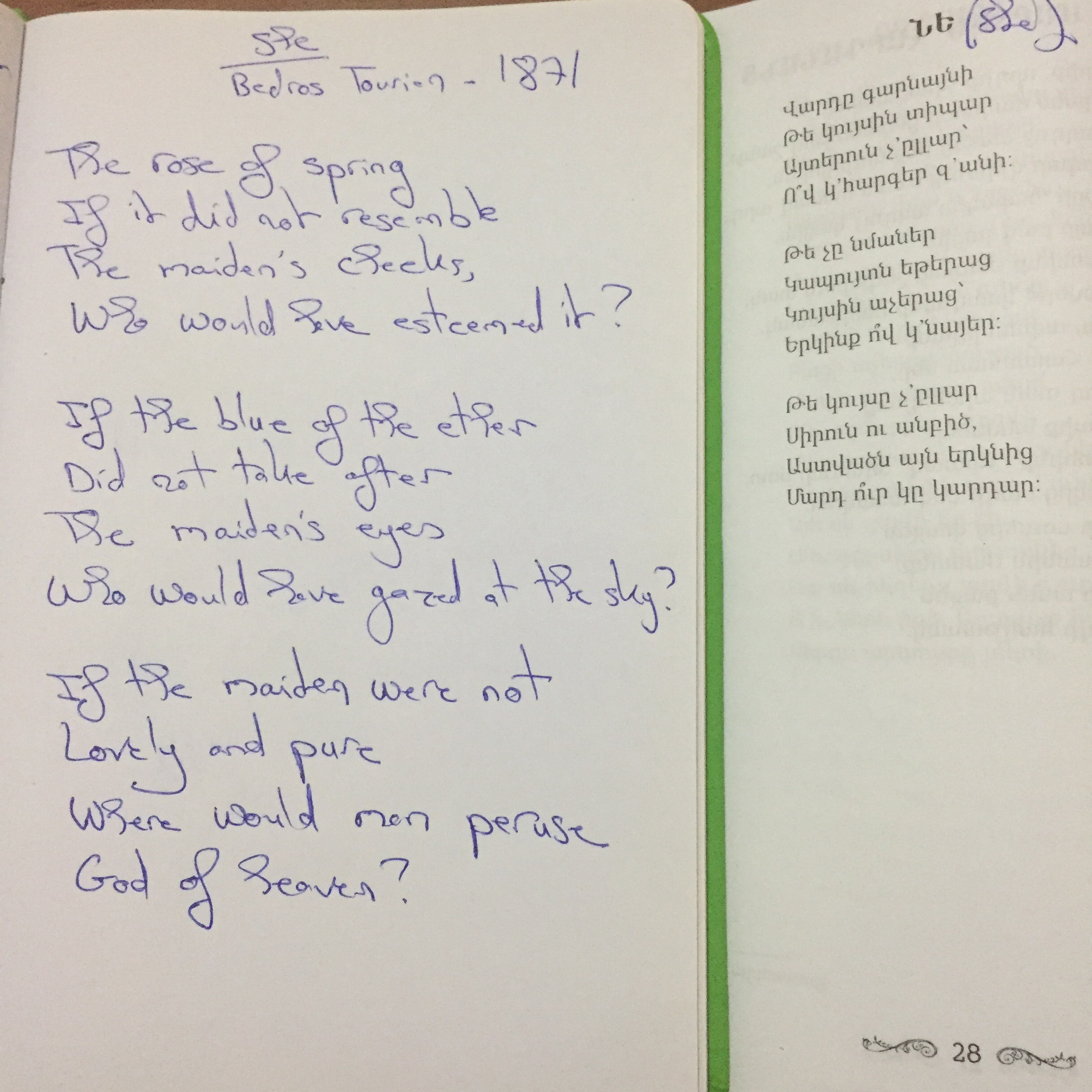
‘She’ (1871) is a poem by Bedros Tourian. Below is my translation from Armenian to English. (If you want to read the original Armenian version, click here.)
***
She
The rose of spring, If it did not resemble The maiden’s cheeks, Who would have esteemed it?
If the blue of the ether Did not take after The maiden’s eyes, Who would have gazed at the sky?
If the maiden were not Lovely and pure, Where would man peruse God of heaven?
Նե —Պետրոս Դուրյան (1871)
Վարդը գարնայնի Թե կույսին տիպար Այտերուն չ՚ըլլար՝ Ո՞վ կ՚հարգեր զ՚անի։
Թե չը նմաներ Կապույտն եթերաց Կույսին աչերաց՝ Երկինք ո՞վ կ՚նայեր։
Թե կույսը չ՚ըլլար Սիրուն ու անբիծ, Աստվածն այն երկնից Մարդ ու՞ր կը կարդար:

 Bored Absurdist