Notes on the Machine: No Jobs in the Future

You’re worried that, sooner or later, AI will replace you and you will be unemployed (and eventually even become unemployable). How will you be able to provide for your family, then? What will you do when they tell you that you will never find a job again because all jobs have been handed over to machines? You don’t know.

Sometimes, you allow your mind to drift and visit the future, where humans are not required to produce anything anymore because everything is produced by the Great Machine. You find it easy to imagine a world without work, where artificial intelligence (with its fifty trillion tentacles) does all the work. But somehow you find it very hard to imagine a role humans can play in that world. No, you cannot think up one important role they can play.

Your mind hovers over the cities of the future like an all-seeing invisible eye looking for humans. In some cities, there are no humans at all. In other cities, humans are there, but their roles are obsolete, and they just hang about idly waiting for something to happen to them. Yet, here and there, there is a city or two in which you detect higher human activity. But what are they all doing? Eating, drinking, and playing all the time. Some of them are making handmade bracelets while others are painting. A lot of them are sunbathing. A few of them are reading books. But what are they really doing? They seem to be waiting… waiting for you to give them ideas.

Now, you think: When this happens, I may not need to worry about providing for my family because, very likely, we’d have entered a post-scarcity world, where there’s absolutely everything abundantly for absolutely everyone. (That is the best case scenario, after all, isn’t it?)

“A job is not simply a source of income but of meaning, purpose, and direction in life as well,” Daniel Susskind writes in A World Without Work. What he says may not be undoubtedly true, but that is how you (and everybody else) have been programmed. Susskind writes, “In a world with less work, we will face a problem that has little to do with economics at all: how to find meaning in life when a major source of it disappears.” And then he quotes Keynes who says, “There is no country and no people, I think, who can look forward to the age of leisure and abundance without a dread. For we have been trained too long to strive and not to enjoy.”

When there’s no more work, what will you do? Who will you become?

Something tells you that gaming will replace work for most people. These individuals will plug themselves into an open-world game where simulations of work keep everyone busy…

And then, there will be others who prefer leisure, who will eat, sleep, and consume slop, and slowly drown in the infinite ocean of simulacra and simulation…

But nothing is inevitable yet. Not yet.
Influence as Capital

In Leo Tolstoy’s War and Peace, we read: “Influence in the world is a capital, which must be carefully guarded if it is not to disappear.”

The character who thinks so also thinks that “if he were to beg for all who begged him to do so, he would soon be unable to beg for himself.” That is why he rarely uses his influence. He prefers to save it for a rainy day.

Influence is a capital, but there is more than one way to use it. You can spend influence (like you spend money), and you can also invest it.

You can spend influence on favors, for instance. The more favors you ask from a person, the less influence you’ll have over him. Eventually, you’ll run out of influence, and you can no longer ask for favors. (The number of favors you can request depends on the “cost” of the favor and the number of influence “points” you have.)

Investing influence is a little different. It goes like this: The son of someone important is looking for a job, so you help him find work by using the influence you have in the company you work for. In this case, you did not spend your influence, you invested it. In the future, the son will be ready to return the favor, and the father will use a bigger influence for you to get something you want. (Note, however, that all investments come with risks. You may invest your influence but get nothing in return.)

Marcus Aurelius on Death and Being Forgotten

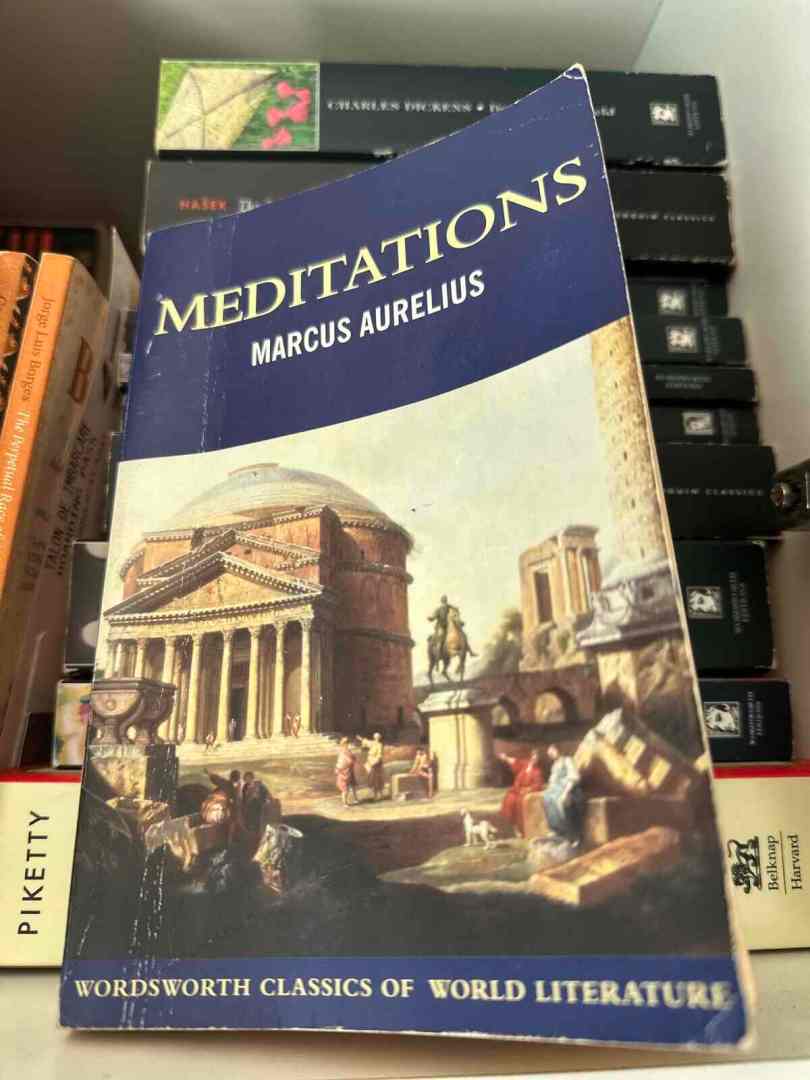
Reading Marcus Aurelius: Don’t Forget that You’ll Be Forgotten

In Meditations1 in general, but especially in Book 7, Marcus Aurelius keeps reminding us that, no matter who we are and no matter what we do, sooner or later, we will be forgotten. My favorite quote summarizing this is:

Close is the time when you will forget all things; and close, too, the time when all will forget you.

– Marcus Aurelius, Meditations

But when one reads this as a standalone quote, one can may come to various conflicting conclusions. So, let’s look at the other quotes and see what we understand from them.

How many whose praises were once widely sung are now consigned to oblivion; and how many who sang their praises are now departed and gone?

– Marcus Aurelius, Meditations

Everything material disappears very swiftly into the universal substance, and swiftly too every cause is reabsorbed into the universal reason, and very swiftly the memory of everything is buried in eternity.

– Marcus Aurelius, Meditations

On fame: Look at the minds and see what they are like, and the sort of things that they flee from and those that they pursue. And reflect, too, that just as sand dunes are always drifting over one another and concealing what came before, so in life also, what comes earlier is very swiftly hidden by all that piles up afterwards.

– Marcus Aurelius, Meditations

And in another place, he says, “How many a Chrysippus, how many a Socrates, how many an Epictetus has time already engulfed.” And then, he also says things like, “In no time at all both you and the wrongdoer will be dead…”

So, what does it mean for the Stoic to remember that he’ll be forgotten? It is to be aware of his mortality and embrace it.

Some may say here, of course, that every adult on the planet knows that he’s eventually going to die. Yes, that is true; however, even with that knowledge, most live as if they’re never going to die. That is what separates the Stoic from the rest. As Ernest Becker puts it in The Denial of Death,2 “Everything that man does in his symbolic world is an attempt to deny and overcome his grotesque fate.” Conversely, we have the Stoic who wakes up every day and takes the pill that reminds him of his impermanence.

For the Stoic, freedom really begins when you stop desiring to be remembered, when you stop being afraid to be forgotten. That’s when you stop caring about the opinions of others and start living for yourself, doing good for its own sake.

To become a Stoic, one must first remember that he’ll be forgotten.


[1] Here I am again, revisiting Marcus Aurelius, reading Meditations. The last time I opened Meditations and shared quotes from it was years ago. But there’s something about this book that makes you want to pick it up again (and again). No wonder interest in Stoicism has spiked in recent years. A book that was written 2,000 years ago that is packed with great advice and a philosophy that comes in handy in the 21st century. (Although, in a book I read recently — The Tragic Mind by Robert D. Kaplan — I came across a passage that said Stoicism is a philosophy suited for slaves. This is, of course, something to think about… but later.)

[2] Becker, Ernest. The Denial of Death. The Free Press, 1997.