Review of and quotes from Paul Virilio's The Aesthetics of Disappearance

A Compressed Review and Quotes from Paul Virilio’s The Aesthetics of Disappearance

Paul Virilio’s ideas flow in The Aesthetics of Disappearance like rainwater in roadside channels. Raindrops (like ideas) come together in these channels and flow (like theories) towards an undisclosed final destination. There’s a (speed-)storm, but the roads are kept from flooding. Major thought systems are merely rinsed; they’re (disappointingly) left undamaged. Virilio’s picnolepsy, which is “the epileptic state of consciousness produced by speed,” flows in roadside channels, proceeds through catch basins, travels through closed pipes, and where it ends up nobody knows… How do underdog theories survive? The book is read casually by a dilettante who remembers only this: the progressive increase in speed entails the progressive disappearance of consciousness. “For the picnoleptic, nothing really has happened, the missing time never existed. At each crisis, without realizing it, a little of his or her life simply escaped.”

Quotes from Paul Virilo’s The Aesthetics of Disappearance

It’s our duration that thinks, the first product of consciousness would be its own speed in its distance of time, speed would be the causal idea, the idea before the idea.

– Paul Virilio, The Aesthetics of Disappearance

Man, fascinated with himself, constructs his double, his intelligent specter, and entrusts the keeping of his knowledge to a reflection.

Paul Virilio, The Aesthetics of Disappearance

Any man that seeks power isolates himself and tends naturally to exclude himself from the dimensions of the others, all techniques meant to unleash forces are techniques of disappearance.

Paul Virilio, The Aesthetics of Disappearance

Review and Quotes from Richard Dawkins' The Selfish

Notes and Quotes from Richard Dawkins’ The Selfish Gene

The Selfish Gene by Richard Dawkins is one of the most important science books of the 20th century. When I read it in 2024, I wished that I had read it earlier. I opened the book looking for the origins of the concept of the meme, but I got much more than what I hoped to get. Not only did I learn about the meme (and that we’re gene machines), but I also learned to play the game of life a little better. (Trust me when I say that you’ll even gain an understanding of dating strategies and tactics by reading this book.) Most of all, I was happy to discover that, scientifically (or statistically) speaking, nice guys can finish first. And that’s good news, isn’t it?

Here are some of my favorite quotes from The Selfish Gene:

We are built as gene machines and cultured as meme machines, but we have the power to turn against our creators.

– Richard Dawkins, The Selfish Gene

The only kind of entity that has to exist in order for life to arise, anywhere in the universe, is the immortal replicator.

– Richard Dawkins, The Selfish Gene

… even with selfish genes at the helm, nice guys can finish first.

– Richard Dawkins, The Selfish Gene

When we die there are two things we can leave behind us: genes and memes.

– Richard Dawkins, The Selfish Gene
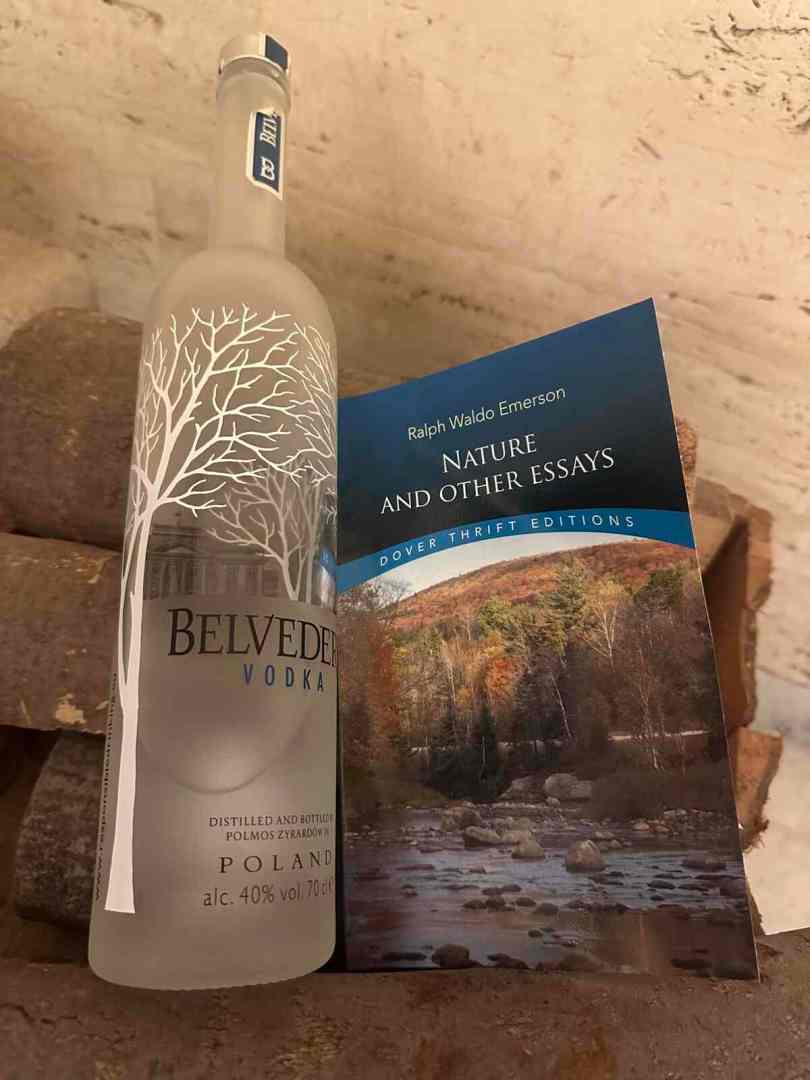
Quotes from Ralph Waldo Emerson's Nature

Quotes from Ralph Waldo Emerson’s Nature

Quotes from Ralph Waldo Emerson’s “Nature” (1836)

A man is fed, not that he may be fed, but that he may work.

— Ralph Waldo Emerson, “Nature” (1836)

All the facts in natural history taken by themselves, have no value, but are barren like a single sex. But marry it to human history, and it is full of life.

— Ralph Waldo Emerson, “Nature” (1836)

Debt, grinding debt, whose iron face the widow, the orphan, and the sons of genius fear and hate — debt, which consumes so much time, which so cripples and disheartens a great spirit with cares that seem so base, is a preceptor whose lessons cannot be forgone, and is needed most by those who suffer from it most.

— Ralph Waldo Emerson, “Nature” (1836)

Every universal truth which we express in words, implies or supposes every other truth.

— Ralph Waldo Emerson, “Nature” (1836)

The true philosopher and the true poet are one, and a beauty, which is truth, and a truth, which is beauty, is the aim of both.

— Ralph Waldo Emerson, “Nature” (1836)

To the wise, therefore, a fact is true poetry, and the most beautiful of fables.

— Ralph Waldo Emerson, “Nature” (1836)

Know then, that the world exists for you.

— Ralph Waldo Emerson, “Nature” (1836)