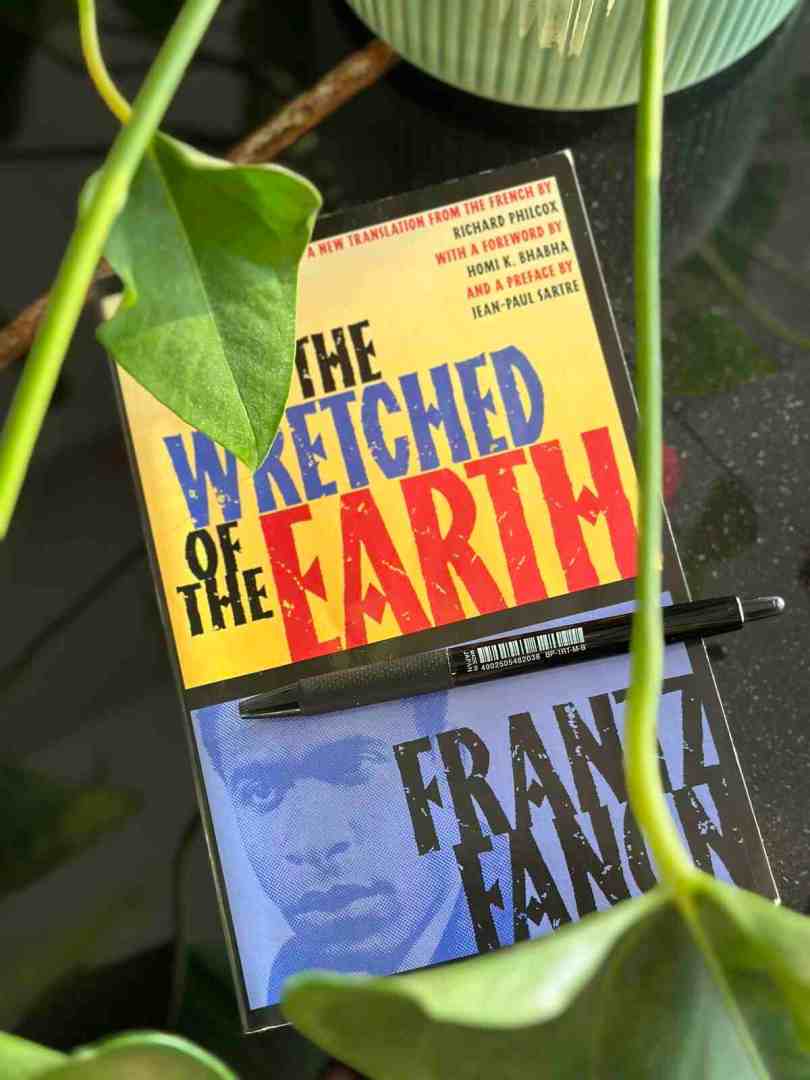
In the opening of The Wretched of the Earth, Frantz Fanon makes sure that we understand that “decolonization is always a violent event.” To liberate himself, the oppressed man can only succeed by resorting to every means, including violence.
Does the colonist “know” the colonized subject? Yes, because the colonist is the one who created (and is always in the process of creating) the colonized subject.
Decolonization is the creation of new men who, up until their liberation, were defined by the colonist and were treated as sub-humans. The creation of “new men” is a central aspect of decolonization. To finally be free, the oppressed man must give birth to himself; to liberate himself, he must redefine himself. As long as he is defined by the Other, he is still colonized. A “new man” is a must. If you want to be more like Europe, why fight for your independence from them? Fanon writes, “Humanity expects other things from us than this grotesque and generally obscene emulation.” He wants the Third World to start a new history of man. Accordingly, he concludes the book with the following: “For Europe, for ourselves and for humanity, comrades, we must make a new start, develop a new way of thinking, and endeavor to create a new man.”
The colonist will always be afraid of the colonized subject because he simply knows that, when the day comes, he must pay for the suffering he caused. The “dignity” he took away from the colonized subject is a debt that must be paid back in full. In the eyes of the man he colonized, he sees the promise of violence — he sees his demise.
The colonized subjects know that they are not, as they are often portrayed, violent animals, but they also know that violence is the only language colonial powers understand. “The colonized man liberates himself in and through violence.”
The oppressor (the colonist, or the bourgeois, or the ruling class) always appears to be more civilized. They present themselves as peaceful, non-violent beings. Educated and cultured, they have their savoir-vivre and their etiquettes. But these things are nothing but curtains and masks. They show their true selves as soon as the colonized man’s fingers roll info fists. Even those who remain “neutral” and “objective” are oppressors. As Fanon puts it, “For the colonized subject, objectivity is always directed against him.”
“The colonial world is a compartmentalized world.” There’s the oppressor’s part of town, and there’s the part of town that belongs to the oppressed. These “parts,” however, don’t necessarily have to be geographical. The oppressor and the oppressed may live on the same street or work in the same building. But even when they occasionally hug and dance like inseparable friends or lovers, there’s still a line — visible or invisible — that separates them. The colonists feel protected by the law and the police. The colonized subjects don’t.
When they rape the wife or kill the child of the colonized subject, nothing happens. When the oppressed man is tortured, he does not complain. He knows that the authorities of oppression will not punish what imitates or reinforces them.
Two things that keep order in the colonized world: force and education. The boot and the book. By force we mean the police or the army. By education we mean the teaching of values that “instill in the exploited a mood of submission and inhibition which considerably eases the task of the agents of law and order.”
“The colonized man is an envious man.” The oppressed man dreams of taking the place of the oppressor. His dreams are “muscular dreams, dreams of action, dreams of aggressive vitality.”
There are no good colonists.
“The apotheosis of independence becomes the curse of independence.”
“How can we free ourselves from being dominated by people from the past who still retain a shadow of power in the world of space, without soiling ourselves by coming into contact with their lives (we can use the soap of word-creation), and leave them to drown in the destiny they have earned for themselves, that of malicious termites?” —from “Subjects for Discussion” by Velimir Khlebnikov —— Why do we have old men running the country? You know, I despise the civil war generation.
When they were young and the world was theirs, they chose to slaughter each other.
Our parents and grandparents: murderers, rapists, thieves, propagandists, cowards, idiots.
And the warlords they used to worship still sit on thrones made of blood and feces.
I don’t care what they stood for. I don’t care what they fought for. Obviously, they failed as I see no victors.
I would rather have a coder or a gamer run the country. A bartender or a young Uber driver would do, too. Not food for worms.
The present — today — is the “future” that the civil war generation built. This is their future. Our future is tomorrow. And tomorrow is a party which they wont — and cannot — attend. (They’ll be bribing the ferryman and drinking from Lethe.)
Their time is up, brothers and sisters. Don’t let them guide you, advise you, teach you. Because if they do, history will repeat itself. Their wisdom is as valuable as our Lira.
So I say to you, Respect your parents and grandparents, yeah, but make sure you destroy the walls of hate that they have built. You have to teach them because they cannot see. The lenses they wear are old and dusty.
They must be reminded that the consequences of today come from the mistakes of the past. They are guilty.
The rewards of tomorrow will sprout from the solutions of today. And it’s up to you. You.
Old men! “We have broken the locks and see what your freight cars contain: tombstones for the young.” —— Քեզ պէտք է հոգեփոխուել, իսկ դա նշանակում է, թէ դու պիտի դառնաս հակապատկերը հայրերիդ: — Գարեգին Նժդեհ
I read Henry David Thoreau’s “Civil Disobedience” (1849) wholeheartedly for the first time a little before I started participating in the Lebanese protests of 2015. That was the year I became aware that I am a political animal.
Then I reread it in 2017 (I know this because I posted a picture of the book on my Instagram page with a description that says, “Getting ready for #revolution on Monday morning.”), and I read it once more today, a week after the Beirut Explosion which took place on August 4, 2020.
“Civil Disobedience” unintentionally turned me into some sort of an anarchist — “That government is best which governs not at all.”
But most importantly, Thoreau made me realize that when a government is corrupt, incompetent, or simply inefficient, one must not remain silent. You must fight for what’s right, even if the majority is against you. “For it matters not how small the beginning may seem to be: what is once well done is done for ever.”
I heartily accept the motto, — “That government is best which governs least;” and I should like to see it acted up to more rapidly and systematically. Carried out, it finally amounts to this, which I also believe, — “That government is best which governs not at all;” and when men are prepared for it, that will be the kind of government which they will have.
Henry David Thoreau, “Civil Disobedience” (1849)
Unjust laws exist: shall we be content to obey them, or shall we endeavor to amend them, and obey them until we have succeeded, or shall we transgress them at once? Men generally, under such a government as this, think that they ought to wait until they have persuaded the majority to alter them. They think that, if they should resist, the remedy would be worse than the evil. But it is the fault of the government itself that the remedy is worse than the evil. It makes it worse.
Henry David Thoreau, “Civil Disobedience” (1849)
All men recognize the right of revolution; that is, the right to refuse allegiance to and to resist the government, when its tyranny or its inefficiency are great and unendurable. But almost all say that such is not the case now.
Henry David Thoreau, “Civil Disobedience” (1849)
All voting is a sort of gaming, like chequers or backgammon, with a slight moral tinge to it, a playing with right and wrong, with moral questions; and betting naturally accompanies it. The character of the voters is not staked. I cast my vote, perchance, as I think right; but I am not vitally concerned that that right should prevail. I am willing to leave it to the majority.
Henry David Thoreau, “Civil Disobedience” (1849)
There is but little virtue in the action of the masses of men.
Henry David Thoreau, “Civil Disobedience” (1849)
Any man more right than his neighbors constitutes a majority of one already.

 Bored Absurdist