In a Flight of Starlings: The Wonders of Complex Systems Book Review

January 15, 2024: In a Flight of Starlings

Earlier today, I finished reading Giorgio Parisi’s In a Flight of Starlings: The Wonders of Complex Systems. Honestly, I expected it to be a little more potent. If we can compare an Italian scientist to an Italian scientist, it could have at least been as good as Carlo Rovelli’s Helgoland: The Strange and Beautiful Story of Quantum Physics. But it wasn’t.

Yet, Parisi’s book is filled with aha moments. To read it is not a waste of time. The doors open, and we enter the mind of a physicist from the back door. This is what happens behind the scenes. This is how scientists think.

And it seems to me now that all good scientists are somewhat into literature and/or philosophy. The references I come across in their books are enough to prove me right.

So, it turns out, only pseudo-scientists who lack creativity say, “Philosophy is dead.” And their statement can also be considered true because, in them, philosophy is dead.

Reading In a Flight of Starlings reminds us of something we tend to forget: There’s poetry everywhere, even in physics.

Before I close this entry, here are two quotes from Giorgio Parisi’s book:

“The physicist sometimes uses mathematics ungrammatically; not following all the rules of grammar is a license that we grant to poets.”

“In the sciences as in poetry, there is hardly a trace in the finished product of the arduous work that the creative process has demanded, or the doubts and hesitations that have been overcome in order to achieve it.”

Beirut, Lebanon. Sunset.

November 29, 2023: A Comment on “Life Has No Meaning”

“Life has no meaning,” people say as if they’ve uncovered the only truth worth uncovering. In their eyes, I see no hope. I see nothing but Death wearing a hedonist’s cloak.

Who are these people anyway? They behave towards the word “meaning” the same way atheists behave towards the word “God.” They say that there’s no evidence, that no such thing can objectively exist, and so on. When I’m with them, I am not surprised when I hear things like, “If it isn’t objective, it isn’t worthy.”

But why would anyone undervalue their subjectivity? Don’t they know it’s the only way they can experience the world?

“Life has no meaning,” they say in a concluding tone, without realizing that discovering the absurd is a beginning rather than an end.

Yes, the universe may be meaningless and irrational. And, most of the time, that is how I feel it is. But the universe’s meaninglessness cannot be the last discovery one makes.

Absurdism cannot be, like most philosophies, a conclusion. On the contrary, it must initiate something in the heart of man. The one struck by the absurd must be triggered to act on something. He is bound to become Sisyphus – and Sisyphus never stops “working.”

The absurdist will say, “Now that I am aware that life has no meaning, I must do something about it and keep doing it until the end.”

*****

But it is useful to note at the same time that the absurd, hitherto taken as a conclusion, is considered in this essay as a starting point.

Albert Camus, The Myth of Sisyphus
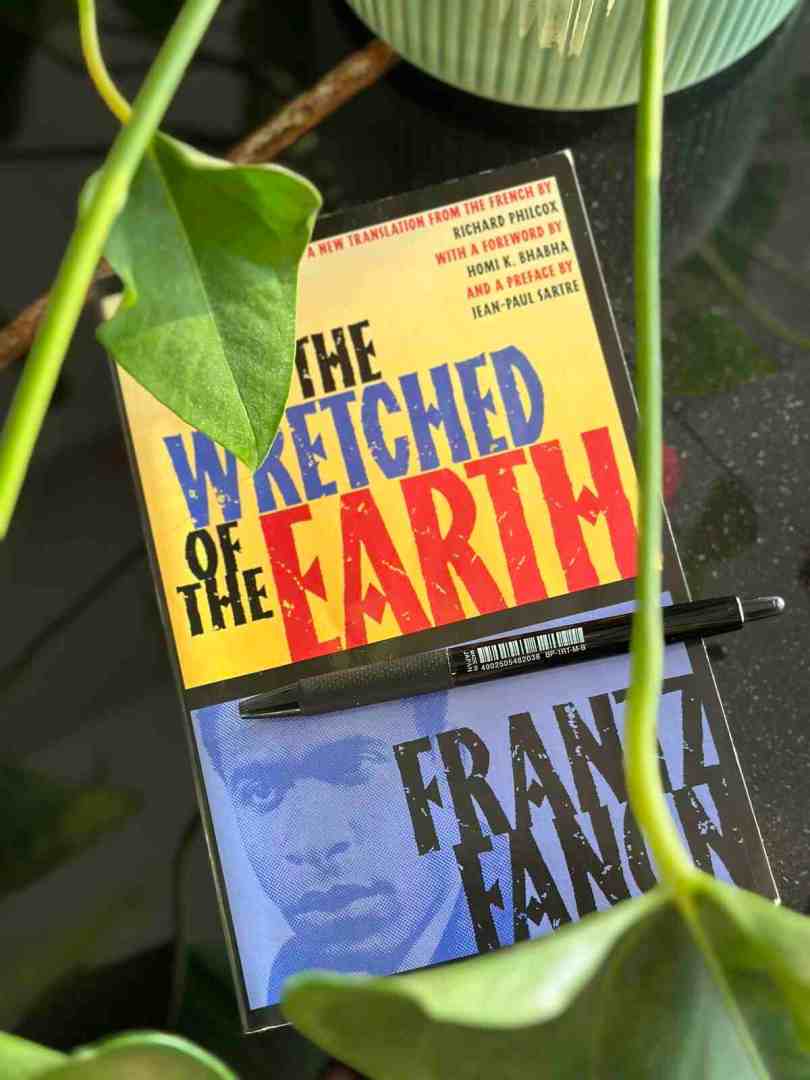
The Wretched of the Earth by Franz Fanon Book Review

Personal Notes: Frantz Fanon’s The Wretched of the Earth

  • In the opening of The Wretched of the Earth, Frantz Fanon makes sure that we understand that “decolonization is always a violent event.” To liberate himself, the oppressed man can only succeed by resorting to every means, including violence.
  • Does the colonist “know” the colonized subject? Yes, because the colonist is the one who created (and is always in the process of creating) the colonized subject.
  • Decolonization is the creation of new men who, up until their liberation, were defined by the colonist and were treated as sub-humans. The creation of “new men” is a central aspect of decolonization. To finally be free, the oppressed man must give birth to himself; to liberate himself, he must redefine himself. As long as he is defined by the Other, he is still colonized. A “new man” is a must. If you want to be more like Europe, why fight for your independence from them? Fanon writes, “Humanity expects other things from us than this grotesque and generally obscene emulation.” He wants the Third World to start a new history of man. Accordingly, he concludes the book with the following: “For Europe, for ourselves and for humanity, comrades, we must make a new start, develop a new way of thinking, and endeavor to create a new man.”
  • The colonist will always be afraid of the colonized subject because he simply knows that, when the day comes, he must pay for the suffering he caused. The “dignity” he took away from the colonized subject is a debt that must be paid back in full. In the eyes of the man he colonized, he sees the promise of violence — he sees his demise.
  • The colonized subjects know that they are not, as they are often portrayed, violent animals, but they also know that violence is the only language colonial powers understand. “The colonized man liberates himself in and through violence.”
  • The oppressor (the colonist, or the bourgeois, or the ruling class) always appears to be more civilized. They present themselves as peaceful, non-violent beings. Educated and cultured, they have their savoir-vivre and their etiquettes. But these things are nothing but curtains and masks. They show their true selves as soon as the colonized man’s fingers roll info fists. Even those who remain “neutral” and “objective” are oppressors. As Fanon puts it, “For the colonized subject, objectivity is always directed against him.”
  • “The colonial world is a compartmentalized world.” There’s the oppressor’s part of town, and there’s the part of town that belongs to the oppressed. These “parts,” however, don’t necessarily have to be geographical. The oppressor and the oppressed may live on the same street or work in the same building. But even when they occasionally hug and dance like inseparable friends or lovers, there’s still a line — visible or invisible — that separates them. The colonists feel protected by the law and the police. The colonized subjects don’t.
  • When they rape the wife or kill the child of the colonized subject, nothing happens. When the oppressed man is tortured, he does not complain. He knows that the authorities of oppression will not punish what imitates or reinforces them.
  • Two things that keep order in the colonized world: force and education. The boot and the book. By force we mean the police or the army. By education we mean the teaching of values that “instill in the exploited a mood of submission and inhibition which considerably eases the task of the agents of law and order.”
  • “The colonized man is an envious man.” The oppressed man dreams of taking the place of the oppressor. His dreams are “muscular dreams, dreams of action, dreams of aggressive vitality.”
  • There are no good colonists.
  • “The apotheosis of independence becomes the curse of independence.”