Influence as Capital

In Leo Tolstoy’s War and Peace, we read: “Influence in the world is a capital, which must be carefully guarded if it is not to disappear.”

The character who thinks so also thinks that “if he were to beg for all who begged him to do so, he would soon be unable to beg for himself.” That is why he rarely uses his influence. He prefers to save it for a rainy day.

Influence is a capital, but there is more than one way to use it. You can spend influence (like you spend money), and you can also invest it.

You can spend influence on favors, for instance. The more favors you ask from a person, the less influence you’ll have over him. Eventually, you’ll run out of influence, and you can no longer ask for favors. (The number of favors you can request depends on the “cost” of the favor and the number of influence “points” you have.)

Investing influence is a little different. It goes like this: The son of someone important is looking for a job, so you help him find work by using the influence you have in the company you work for. In this case, you did not spend your influence, you invested it. In the future, the son will be ready to return the favor, and the father will use a bigger influence for you to get something you want. (Note, however, that all investments come with risks. You may invest your influence but get nothing in return.)
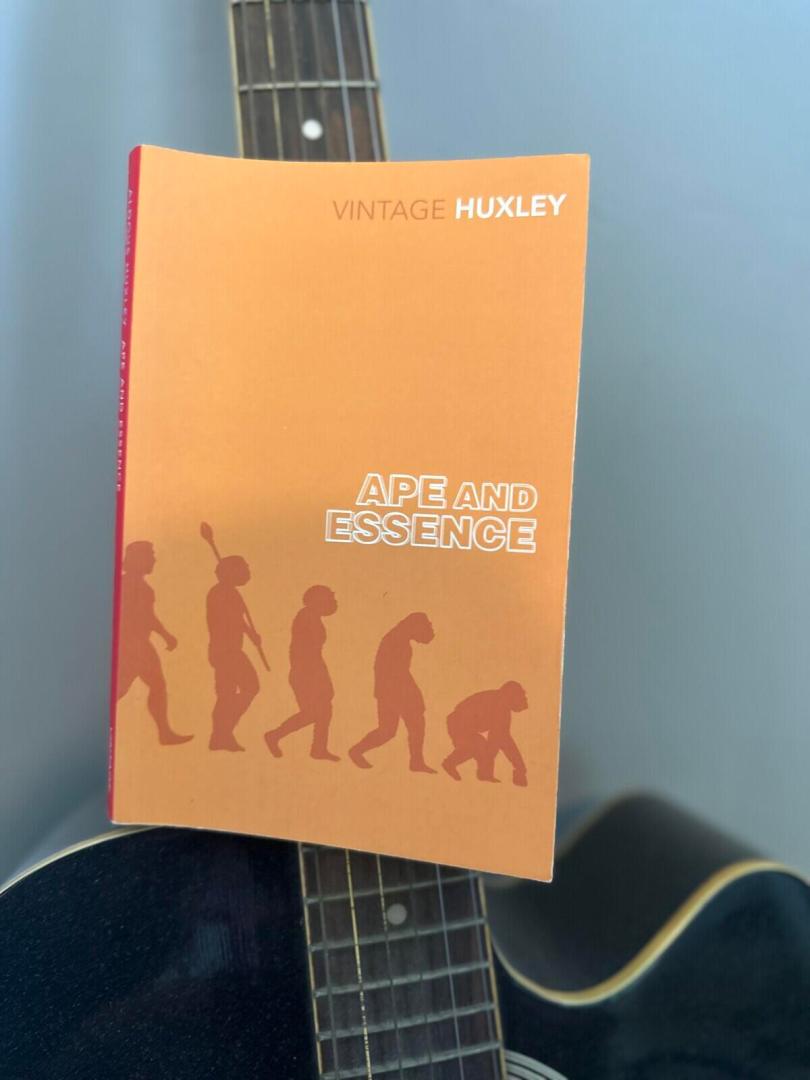
5 quotes from Aldous Huxley's Ape and Essence

Quotes from Aldous Huxley’s Ape and Essence

About five years ago, browsing around a bookshop, I stumbled across Aldous Huxley’s Ape and Essence. Of course, I was familiar with Huxley and a bunch of his works, such as Brave New World, The Doors of Perception, and Music at Night. But I had never heard of Ape and Essence before. So, I picked it up, read its synopsis, and a few random sentences from random pages. “This smells like a delicious dystopian novel,” I whispered to myself. And, to no one’s surprise, I ended up buying it. And I enjoyed reading it very, very much. (So, if you’re into dystopian literature like I am, make sure you read this one, too.)

Here are five quotes from Aldous Huxley’s Ape and Essence:

In the field of politics the equivalent of a theorem is a perfectly disciplined army; of a sonnet or picture, a police state under a dictatorship.

– Aldous Huxley, Ape and Essence

But I was thinking that the dream of Order begets tyranny, the dream of Beauty, monsters and violence.

– Aldous Huxley, Ape and Essence

Yes, my friends, remember how indignant you once felt when the Turks massacred more than the ordinary quota of Armenians, how you thanked God that you lived in a Protestant, progressive country, where such things simply couldn’t happen — couldn’t happen because men wore bowler hats and travelled daily to town by the eight-twenty-three.

– Aldous Huxley, Ape and Essence

They have to be punished for having been punished.

– Aldous Huxley, Ape and Essence

And whenever evil is carried to the limit, it always destroys itself.

– Aldous Huxley, Ape and Essence
Quotes from Ernest Hemingway's The Old Man and the Sea and Notes

One Lesson You Learn Reading Ernest Hemingway’s The Old Man and the Sea

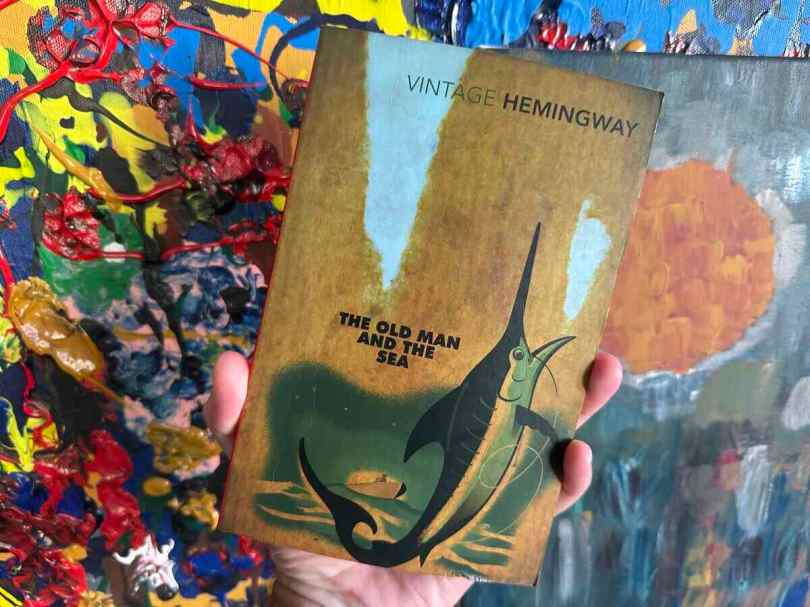
I like to describe The Old Man and the Sea as Ernest Hemingway’s Moby Dick. After all, it’s about an old man going after a giant fish. Am I right?

The first time I read it, I was in my early twenties. I didn’t like it much. The second time I read it, I was in my early thirties. I liked it a little better that time even though reading it was a little like eating sauceless boiled spaghetti – as is.

But there’s this one killer paragraph that I keep coming back to. This paragraph makes the whole novel worth reading. It will sneak inside your soul and slowly, very slowly, change you.

Actually, I opened the book today looking for this paragraph that I’m telling you about. It was like I needed to read it.

The paragraph says:

You are killing me, fish, the old man thought. But you have a right to. Never have I seen a greater, or more beautiful, or a calmer or more noble thing than you, brother. Come on and kill me. I do not care who kills who.

– Ernest Hemingway, The Old Man and the Sea

What do we learn from this?
Well, let me put it this way and motivate you as I simultaneously motivate myself:

Go after what you want.
Go after something big, something beautiful, something noble.
Go after it with all you have – mind, body, and spirit.
Do everything in your power.
And then, do everything in your power again.
Risk everything.
Do it.
When you inhale, it’s this dream that fills your lungs.
Do it.
It doesn’t matter if you come out of it a winner.
If you give it all you got, if you really give it all you got,
it’s all that matters.

As you chase your dreams, it’s okay to say, “You are killing me, fish.”
Because, like Charles Bukowski once put it, “Find what you love, and let it kill you.”
And as Samuel Beckett once put it, “Ever tried. Ever failed. No matter. Try again. Fail again. Fail better.”