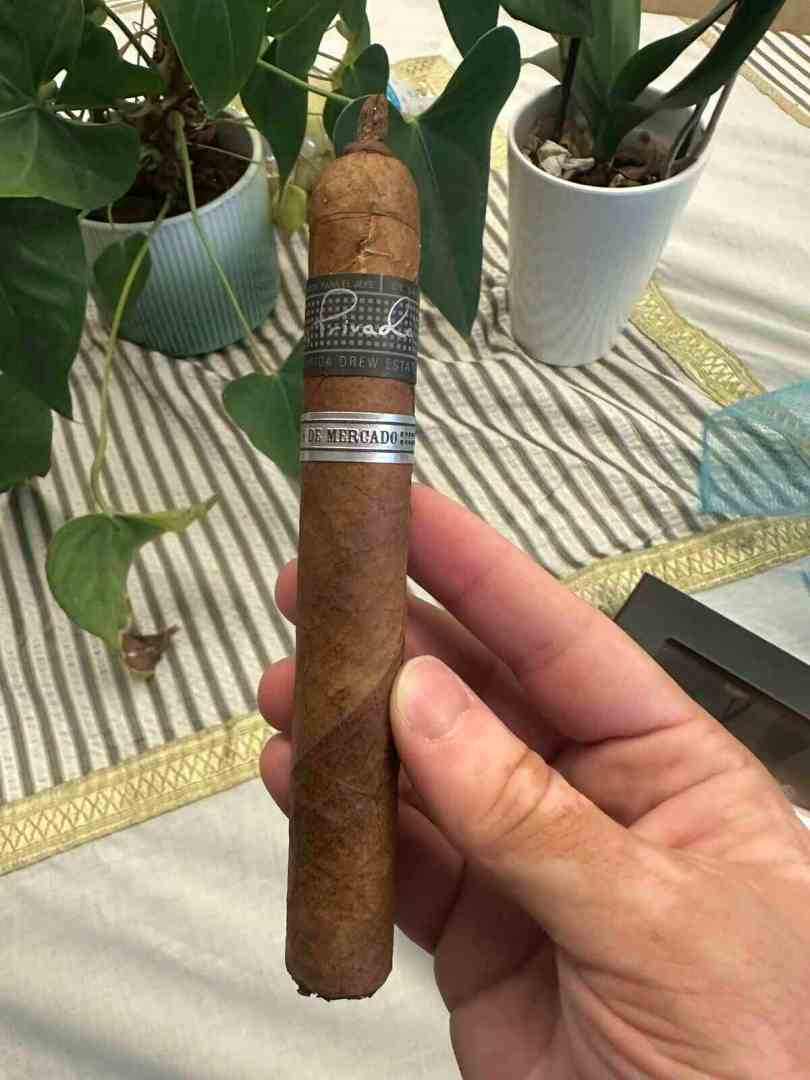
Reviewing the Blackened M81 cigar at Mareva Cigar Lounge in Lebanon

Have a Cigar: Blackened M81 Toro

Name: Blackened M81 Toro
Country: Nicaragua
Shape: Parejo
Size: Toro (6 inches x 52)
Strength: Full

As soon as the Blackened M81 started burning, I ordered an espresso and a bottle of sparkling water. Espresso, of course, because I love pairing full-bodied Nicaraguan cigars with espresso. And sparkling water, of course, because I’ll occasionally need to clean my palate and experience anew the harmony of notes the cigar delivers. Later, a glass of Wild Turkey 101 was added to the mix as well. Why? Because the cigar lounge owner suggested I pair the M81 with a bourbon. So, in the end, I had three different beverages versus one cigar.

Branding: The cigar has two bands. The main band is a narrow one that just says, Blackened. At the foot of the cigar, we have a wider band that has the name and the tagline of the cigar: M81, Maduro to the Core.

Construction: Great.

Pre-light: Promising. You can already tell there’s going to be strong notes of chocolate in there. I close my eyes and see the black leather jacket who a tattooed woman who has just come out of a concert and is looking to take a risk to spend the excess adrenaline she has in her blood.

Cut: Straight cut, as always. I don’t remember the last time I went for a V-cut.

Burn: It burned quite evenly but not 100% of the time. I had to even it a couple of times.

Duration: Almost 120 minutes.

Draw: Excellent.

Smoke: Loved it. A generous amount of thick white smoke.

Ash: Good.

Flavors: (Heavy Metal) Notes of dark chocolate, leather, burnt toast, and black pepper.

Sunset Somewhere in Lebanon

Unstructured Reflections on Life: Normative Adversity

Normative adversity. — There are certain challenges (and obstacles) in life that we are, from the day we are born, expected to face. In most cases, it’s only a matter of time until we do so. Common challenges like family disputes and conflicts with romantic partners, job loss and other workplace issues, academic challenges, stress, aging, and life transitions like getting married or becoming a parent — they are called “normative” adversities precisely because they are normal (and predictable). Even if one takes preventive measures, he is bound to undergo (most of) them eventually. [Note: An excessive amount of preventive measures to keep normative adversities at bay, such as a zero-risk lifestyle, will only keep the person from living a fulfilling life. It’s fine if one is careful, as long as he isn’t too careful.] Although many such “normal” challenges are consequential, they are not (and shouldn’t be) too much to bear (in normal conditions). Society expects us to deal with them without making a lot of noise. Nonetheless, at different times in our Sisyphean pursuit of happiness and security, the boulder we continuously roll to the top of the mountain (or occasionally carry on our shoulders) gets heavier and heavier and heavier. Splinters of anxiety, bits of worries, flecks of inconveniences, and failures pile up and congregate to eventually form a massive crisis. We burn out. We halt. We fall. We lose. We are tempted to give up and let go of what we’ve been trying to achieve for so long. We ask ourselves, “Will I survive this one, or is this the end of the road for me? Will I be able to overcome this awe-inspiring, terrifying obstacle? What am I trying to hold on to? What am I trying to prove? Is it really worth it?” We almost always almost give up but don’t. This is when we remember that what we’re facing, even though it’s overwhelming, isn’t anything that is outside of the normal. Millions of people have experienced in their own way what we are experiencing now in our own way. It is a part of life, of the way the world works. So, even though the challenges we’re grappling with may seem or even are crippling, they’re bearably crippling. As long as there’s something to hold on to, they are like quicksand we can pull ourselves out of. But there are no guarantees, of course. We can purchase all the insurance plans in the world (health insurance, car insurance, home insurance, travel insurance, life insurance, etc.) and take all the security measures in the world (bodyguards, CCTVs, alarm systems, etc.) and still feel insecure. Why? Because nothing can protect us from life’s uncertainties. There’s no certainty of the future for anyone, and misfortunes are keen to knock on our doors. However, if we listen to our human spirit, we will know that it is not afraid, it wants to put up a fight, it wants to carry on. And, here, we can already hear the incantation of Samuel Beckett’s words in our hearts. First, the quote from The Unnamable that says, “I can’t go on. I’ll go on.” [Even when it’s impossible to go on, when all hope is lost and the future is uninviting, we have no other choice but to take a step into the next moment. We’ve always been sliding downhill on the arrow of time, from our past towards our future, haven’t we? There’s only one direction. And we can imagine that the arrow of time extends downwards, not upwards or horizontally, because the future is the force of gravity that’s pulling everything down…] Second, another Samuel Beckett quote. This one is from the story called Worstward Ho, and it says, “Ever tried. Ever failed. No matter. Try again. Fail again. Fail better.” And I hope that, to no one’s surprise, the answer is always to keep on trying. The answer is to own it, face our fears, turn challenges into meaningful experiences, and transform boring tasks into caves we can explore, seas we can dive into. Understanding the concept of normative adversity and accepting it — that most of the challenges we face are normal — is the (only real) way to cope with our day-to-day struggles. We have the same unique challenges as the rest of the world population, and we must deal with them our own way. “When you have done this,” Schopenhauer writes, “you will order your expectations of life according to the nature of things and no longer regard the calamities, sufferings, torments and miseries of life as something irregular and not to be expected but will find them entirely in order, well knowing that each of us is here being punished for his existence and each in his own particular way.” [Note: we shouldn’t take punishment as the sad fate of every man here. Disagreeable things are the seasonings of life. Whether we like it or not, we must be a little masochistic to be able to enjoy being human. They say, “No pain, no gain.” The destination may be paradise for everyone, but the journey is for the few, for those who are ready to get hurt while paving new paths — the risk-takers and adventurers.] So, briefly put, what are we saying here? When it comes to normative adversities, all we need to do is take responsibility, deal with them (calmly), and carry on.

March 31, 2025: Breakfast Beer, Anyone?

In Why We Sleep, Matthew Walker talks about the REM-sleep-disrupting consequences of alcohol. He explains how the quality of your sleep is worsened when you drink. First, he says, alcohol fragments sleep, which will keep you from having a healthy amount of hours of continuous sleep. Second, he says, REM sleep is often suppressed if there’s alcohol in your body. So, you’ll dream less, which is not (and cannot be) a good thing… He also says that, when it comes to sleep and alcohol consumption, abstinence is the best advice he can offer.

And that’s sad news for all of us, isn’t it?

But he does (jokingly) say something interesting right before he concludes the part about alcohol, and I will quote it here:

“The politically incorrect advice I would (of course never) give is this: go to the pub for a drink in the morning. That way, the alcohol will be out of your system before sleep.”

And that’s a little good news, isn’t it?

Breakfast beer, anyone?