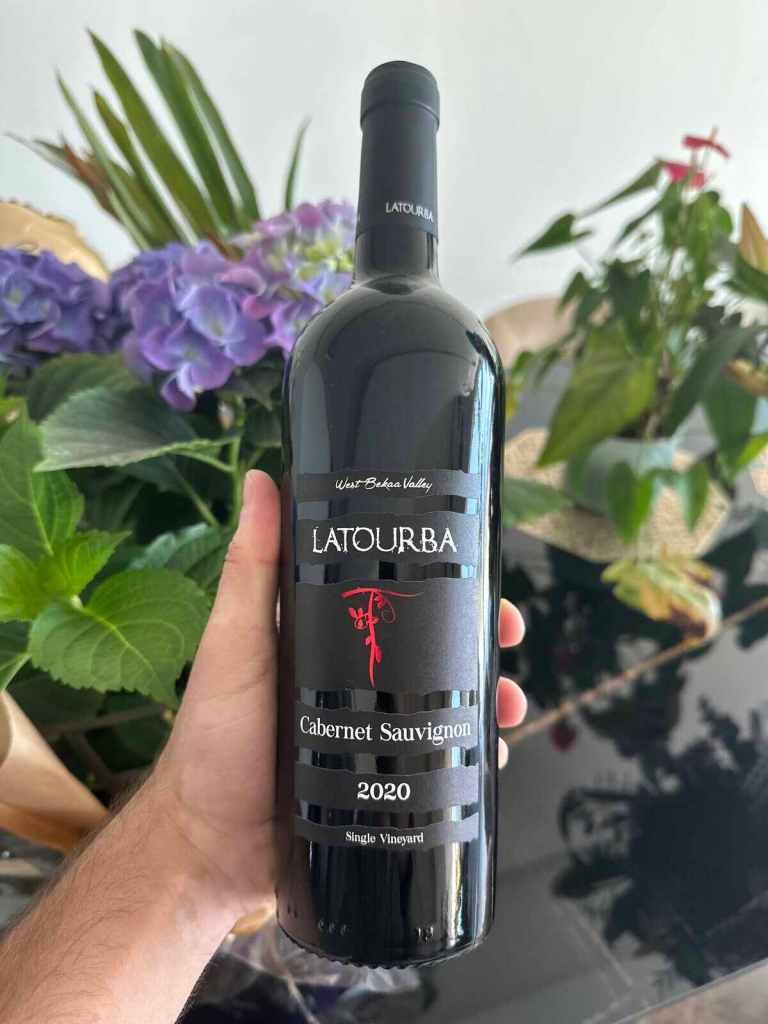
Review of Latourba's Cabernet Sauvignon

Lebanese Wines: Latourba Cabernet Sauvignon 2020

Name: Latourba Cabernet Sauvignon 2020
Type: Red Wine
Grapes: Cabernet Sauvignon
Year: 2020
Country: Lebanon
Region: Bekaa Valley
Date Consumed: December 21, 2025

Young and beautiful. Full-bodied with strong tannins. Latourba’s Cabernet Sauvignon is probably one of my favorite single-varietal wines coming from Lebanon. Although it has good ageing potential, my preference here is to uncork it as soon as possible and drink it like you’re drinking from the fountain of youth. It goes without saying that it pairs excellently with all sorts of red meats and strong cheeses… and chestnuts, too. Cheers.

Review of the wine from Lebanon called Latourba Cabernet Sauvignon, vintage 2020.
Lebanon Wine Review: Umami Red 2017

Lebanese Wines: Umami Red 2017

Name: Umami Red 2017
Type: Red Wine
Grapes: Cabernet Franc, Merlot
Year: 2017
Country: Lebanon
Region: Bekaa Valley
Date Consumed: December 19, 2025

A nicely balanced Lebanese red, blending cabernet franc and merlot. I got stimulating notes of cocoa and spices and somewhat subtle hints of leather. This is undoubtedly a wine worth trying again. I believe it would pair nicely with roast beef and slow-cooked meat in general. And maybe that’s what I’ll do next time.

Influence as Capital

In Leo Tolstoy’s War and Peace, we read: “Influence in the world is a capital, which must be carefully guarded if it is not to disappear.”

The character who thinks so also thinks that “if he were to beg for all who begged him to do so, he would soon be unable to beg for himself.” That is why he rarely uses his influence. He prefers to save it for a rainy day.

Influence is a capital, but there is more than one way to use it. You can spend influence (like you spend money), and you can also invest it.

You can spend influence on favors, for instance. The more favors you ask from a person, the less influence you’ll have over him. Eventually, you’ll run out of influence, and you can no longer ask for favors. (The number of favors you can request depends on the “cost” of the favor and the number of influence “points” you have.)

Investing influence is a little different. It goes like this: The son of someone important is looking for a job, so you help him find work by using the influence you have in the company you work for. In this case, you did not spend your influence, you invested it. In the future, the son will be ready to return the favor, and the father will use a bigger influence for you to get something you want. (Note, however, that all investments come with risks. You may invest your influence but get nothing in return.)